March 17, 2026
Roundtable May 2025
Author: Elaine Milburn
Date: March 17, 2026
Roundtable May 2025
Risk, Role Dilution and the Commercial Leader Under Pressure
1. Event Overview
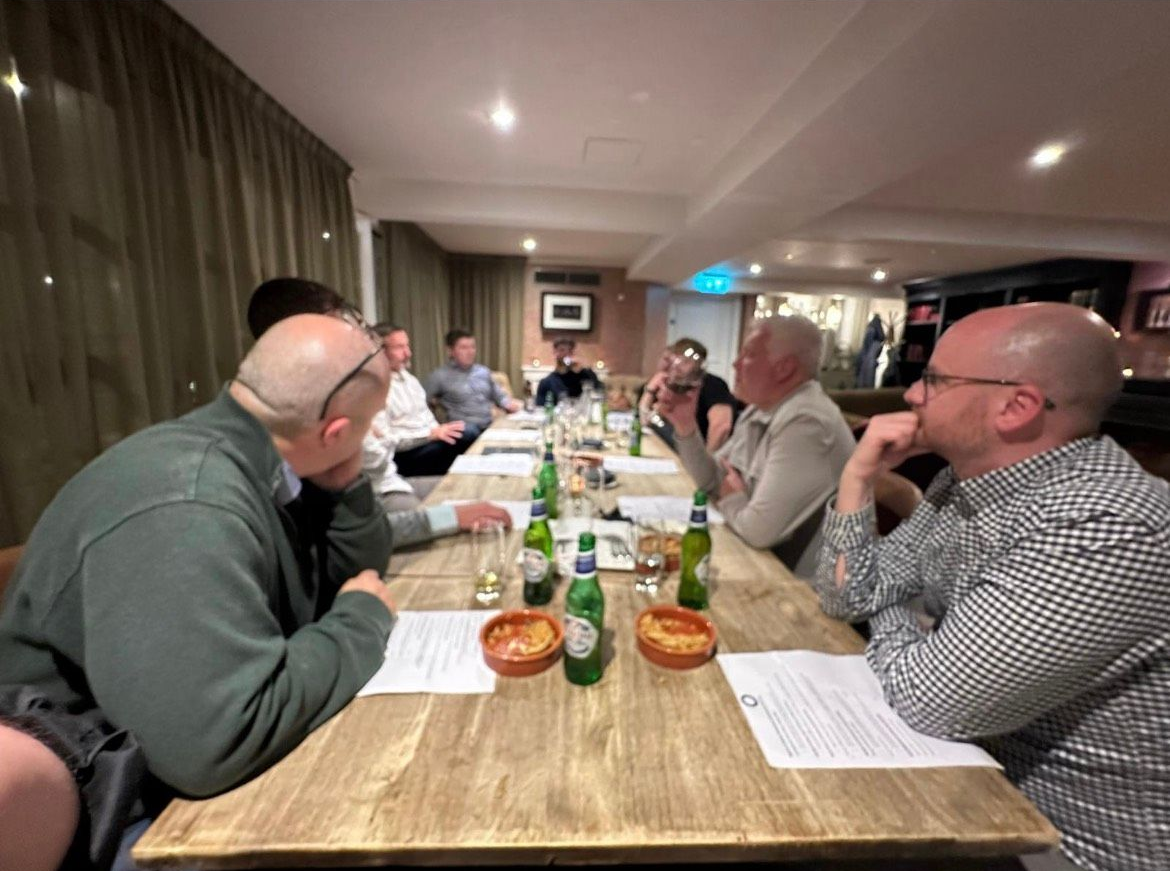
Event: CLIC – Manchester Dinner
Date: Thursday 22 May 2025
Location: King Street Townhouse, Manchester
Theme: Commercial Leadership in a Changing World
Attendees: 12
Organisations represented: Nuclear, decentralised power, retail fit-out, civil engineering, M&E, high-voltage utilities, rail, infrastructure, residential delivery, and specialist recruitment.
This discussion mattered because it exposed a live tension running through the commercial function: businesses still rely heavily on strong commercial judgement, but many are no longer developing that judgement in a consistent way. The room kept returning to the same underlying issue: the industry wants commercially astute people who can manage contracts, risk, money and difficult conversations, but too often it is producing partial capability, inflated titles and uneven standards.
2. Agenda / Discussion Focus
The evening was intended to examine four connected issues: the changing identity of the quantity surveyor, the practical implications of AI on the commercial function, the reality of progression and title inflation, and whether chartership still carries real weight.
In practice, the discussion became a broader examination of commercial capability: what the role now requires, where training is failing, and how leaders should respond.
3. The Atmosphere In The Room
The discussion was candid, informal and unusually direct. The tone was pragmatic rather than theoretical. There was frustration in the room, particularly around weak fundamentals, poor training environments and people being promoted beyond their real capability.
At the same time, the atmosphere was constructive. This was not a room indulging in nostalgia for its own sake. Most of the frustration came from leaders who still care deeply about standards and who are trying to build teams in difficult market conditions.
There was also a clear sense of relief in being able to talk openly with peers from adjacent sectors. Several participants noted that commercial leaders rarely get the opportunity to compare notes across industries under Chatham House conditions.
4. Key Themes From The Discussion
4.1 The QS role has shifted from measurement to contract, money and judgement
The opening theme was not whether the quantity surveyor role has changed, but how far. Several participants argued that the older measurement-heavy model has already been displaced in many businesses by a more contractual, commercial and risk-oriented role.
In some organisations, engineers now produce much of the quantity and technical input, while commercial teams are expected to administer contracts, manage change, protect entitlement and recover money. This was described not simply as a change in tasks, but as a shift in professional identity.
The strongest view in the room was that the modern QS is increasingly valued for contract knowledge, stakeholder handling, commercial judgement and autonomy rather than traditional measurement alone.
4.2 The industry is losing core fundamentals and producing fragmented capability
Although the role has evolved, there was repeated concern that the industry is allowing core technical and commercial fundamentals to erode. Participants cited weak measurement skills, poor Excel ability, inconsistent understanding of payment mechanisms, and an inability to read contracts properly.
This was not framed as a complaint about younger people alone. The more serious criticism was directed at company structures and training models that leave people doing narrow, repetitive tasks for years without building rounded capability. Large firms came under particular criticism for creating people with polished titles but thin practical competence.
A repeated distinction emerged between people who understand the mechanics of cost, value, margin, payment and entitlement, and those who have only learned a fragment of the role in one environment.
4.3 Businesses are blurring commercial and operational boundaries in unhelpful ways
A recurring frustration was the dilution of role clarity. Participants described project managers carrying commercial duties, QSs being asked to absorb operational administration, and commercial teams taking on tasks that properly belong elsewhere.
In several examples, this dilution was not a sign of collaboration but a symptom of weak capability or poor discipline. When operations do not manage their side of the job, commercial teams end up compensating, which then prevents them from doing their own role properly. That in turn creates further loss of control.
The discussion made clear that many of the industry’s commercial problems are not caused by contract form alone. They are caused by organisations failing to define who owns what, then wondering why accountability collapses.
4.4 AI is being treated seriously, but the room does not yet believe it can replace judgement
AI generated the most animated section of the evening. The room did not dismiss it. Several participants are already using or testing tools for notices, contract review, planning outputs and drafting. The tone was neither complacent nor evangelistic.
The central view was that AI will improve productivity in defined parts of the workflow, especially first drafts, reviews, pattern recognition and administrative speed. However, most participants did not believe it can yet replicate commercial judgement, strategic timing, negotiation, trust or the handling of imperfect real-world facts.
Examples shared in the room reinforced this. AI could produce plausible outputs, but those outputs were sometimes fundamentally wrong in clause selection, obligations or recovery route. The risk identified was not just technical error, but false confidence.
The most balanced position was that AI will be valuable to experienced practitioners and dangerous in the hands of people who cannot challenge what it produces.
4.5 Progression is becoming increasingly detached from genuine readiness
The room returned repeatedly to the problem of title inflation. Several leaders described inheriting teams where people held senior titles without being able to manage others, run work autonomously or carry real accountability.
There was broad agreement that progression has become muddied by labour scarcity, retention pressure and inconsistent standards between firms. In some businesses, titles are being used as a retention device rather than a recognition of capability.
The discussion drew an important line between responsibility and accountability. Many people want the visible signs of progression, but fewer are ready for the weight that comes with owning outcomes, absorbing pressure and making decisions without constant reassurance.
4.6 Good development still depends on exposure, trust and managers who actively coach
Despite the criticism of industry structures, the conversation was not fatalistic. A more hopeful pattern also emerged: most people in the room who had progressed quickly could point to a period of intense exposure, a manager who trusted them early, or a business circumstance that forced them to learn fast.
That did not mean reckless promotion. It meant real responsibility, close support and clear ownership. Participants consistently praised managers who create learning by giving people room to act, then correcting them honestly.
The room’s view was that talent is still built through proximity to live decisions, difficult conversations and commercial consequences. Structured training matters, but nothing replaces real accountability handled well.
5. Areas of Strong Agreement
Strong fundamentals still matter
There was clear agreement that however much the role evolves, commercial professionals still need a solid grasp of basics: cost, value, payment, margin, contract mechanics and commercial control. Technology may change workflows, but it does not remove the need for judgement grounded in fundamentals.
The current training model is inconsistent and often weak
Most participants agreed that the industry is not developing people consistently enough. The concern was less about individuals and more about systems that fail to give proper breadth, ownership and coaching.
Soft skills remain commercially decisive
The room was aligned on the importance of communication, judgement, trust and the ability to handle difficult conversations. Several participants argued that these qualities now differentiate strong commercial people more than technical tools alone.
AI will support the role before it replaces it
No one argued that AI should be ignored. Equally, there was little support for the idea that it can replace experienced commercial leadership in the near term. The prevailing view was augmentation, not substitution.
Better leaders build people by giving them ownership
There was strong support for development models that give people responsibility in stages, expect them to think for themselves, and create accountability without abandoning them.
6. Areas of Disagreement or Tension
Is the role evolving positively or losing its identity?
One tension in the room was whether the shift away from traditional quantity surveying skills should be seen as progress or decline. Some saw the evolution towards contracts, stakeholder management and commercial strategy as necessary and overdue. Others worried that once the core disciplines are lost, the profession becomes too vague and too easy to dilute.
This was not a simple split between old and new thinking. The real divide was between those who believe the profession can safely evolve because the fundamentals remain underneath, and those who think the fundamentals are already being lost.
How much of the problem sits with individuals versus employers?
There was also a tension around responsibility for weak capability. Some comments focused on younger professionals lacking confidence, resilience or willingness to engage. Others pushed back and argued that employers are producing this outcome by giving people narrow work, poor supervision and inflated titles.
The stronger argument in the room leaned towards employer responsibility, but the conversation did not let individuals off entirely.
Does chartership still signal meaningful quality?
Views diverged on chartership. Some participants still saw it as a useful sign of commitment, challenge and professional standard. Others were openly sceptical and saw it as more relevant on the consultancy side than in live contracting environments.
The tension here was not whether learning matters, but whether formal institutions still reflect the capability that contractor-side businesses actually need.
7. Notable Quotes
“They only decide they need a quantity surveyor when someone owes them 100 grand.”
“The modern QS is money.”
“A good QS will pay for themselves.”
“It doesn’t have common sense.”
“People want the title, but they don’t want the accountability.”
“Manage your managers.”
8. Surprising Insights or Strong Moments
One of the strongest moments came when the discussion moved from criticising younger professionals to criticising the systems producing them. That shifted the conversation from generational frustration to management responsibility.
Another notable moment was the practical framing of AI. The room did not treat it as abstract future technology. It was discussed in immediate, operational terms: notices, contract reviews, drafting, planning outputs and security constraints. That grounded the issue in real commercial practice rather than hype.
A third strong moment came in the discussion on progression. What stood out was how often genuine advancement had come not from formal structures but from commercial pressure, business scarcity or one manager taking a deliberate interest in someone’s development. It revealed how dependent progression still is on individual leaders rather than robust systems.
9. Practical Takeaways for Leaders
Re-establish what the commercial role is for
Leaders should define clearly what commercial staff are expected to own, and just as importantly what they are not there to absorb from operations. Role dilution is quietly eroding effectiveness.
Rebuild fundamentals rather than assuming they exist
Do not assume that titles, years served or formal qualifications mean someone understands core commercial mechanics. Test for payment logic, contract reading, cost-value understanding, forecasting discipline and practical judgement.
Separate progression from retention tactics
If titles are being used to keep people, leaders may be storing up bigger problems later. Progression should reflect readiness for ownership, not just scarcity in the labour market.
Develop managers deliberately, not by accident
The room made clear that strong individual contributors do not automatically become good managers. Businesses need to train for management explicitly rather than treating it as the default next step.
Use AI where it speeds process, but keep human judgement in the decision loop
AI can already reduce drafting and review time. It should be used where it adds efficiency, but outputs need experienced review, especially on contract language, entitlement and strategy.
Build teams around ownership and judgement
The most effective development model discussed was simple: give people responsibility in stages, insist they bring answers rather than just problems, and support them closely enough that they learn without being protected from reality.
10. Questions Left Open
- How can the industry create a more consistent baseline for commercial capability without forcing one rigid career model?
- If the QS role continues to split between cost, contract and operational functions, should job titles and career paths become more explicit?
- How far can AI be trusted in live commercial environments before the liability risk becomes unacceptable?
- What should progression look like in a market where businesses still need retention tools but cannot afford false seniority?
- Does chartership need to evolve if it is to remain relevant to contractor-side leadership roles?
11. What This May Mean Going Forward
This discussion suggested that commercial leadership is entering a more demanding phase, not a simpler one. The administrative parts of the role may become increasingly automated, but that will only increase the value of people who can exercise judgement, influence decisions, interpret risk and maintain commercial control under pressure.
The industry appears to be moving towards a sharper divide. On one side will be people who can use technology, read the situation, manage contracts and lead others with credibility. On the other will be those with partial capability, inflated titles and insufficient grounding.
For senior leaders, the implication is clear: the next advantage will not come from technology alone or from title-heavy structures. It will come from building commercial teams with stronger fundamentals, clearer accountability and better judgement.
Appendix: Event Context
Attendees named in the transcript and event notes: Paul Nunn, Jordan Freemantle, Adam Beesting, Gwyn Taylor, James Dunne, Robson Leslie, Chris Arrand, Davin Dhillon, Chris Craine, Matthew Williams, John Pollard, Dan Jackson.
Agenda themes:
- Identity and evolution of the QS role
- AI and the commercial function
- People, progression and performance
- Whether chartership still matters
Proposed next session: 17 July 2025